Kazakh Food: Top 7 Traditional Dishes to Try
Kazakh cuisine was shaped by a nomadic way of life, where food needed to be nourishing, easy to transport, and...
Read more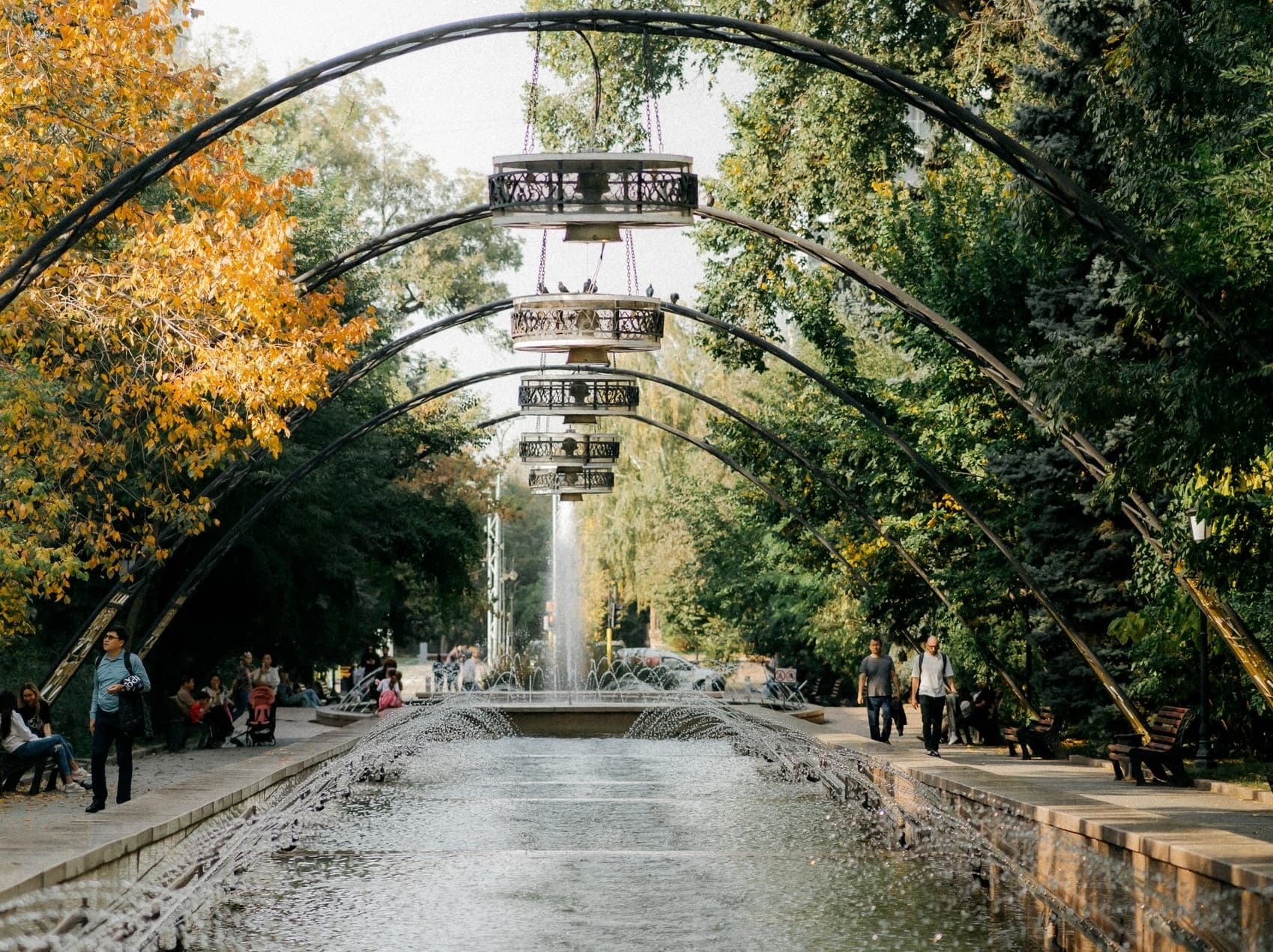
This route is ideal for those who enjoy walking, art, and wine. It will allow you to feel the atmosphere of Almaty.
10:00
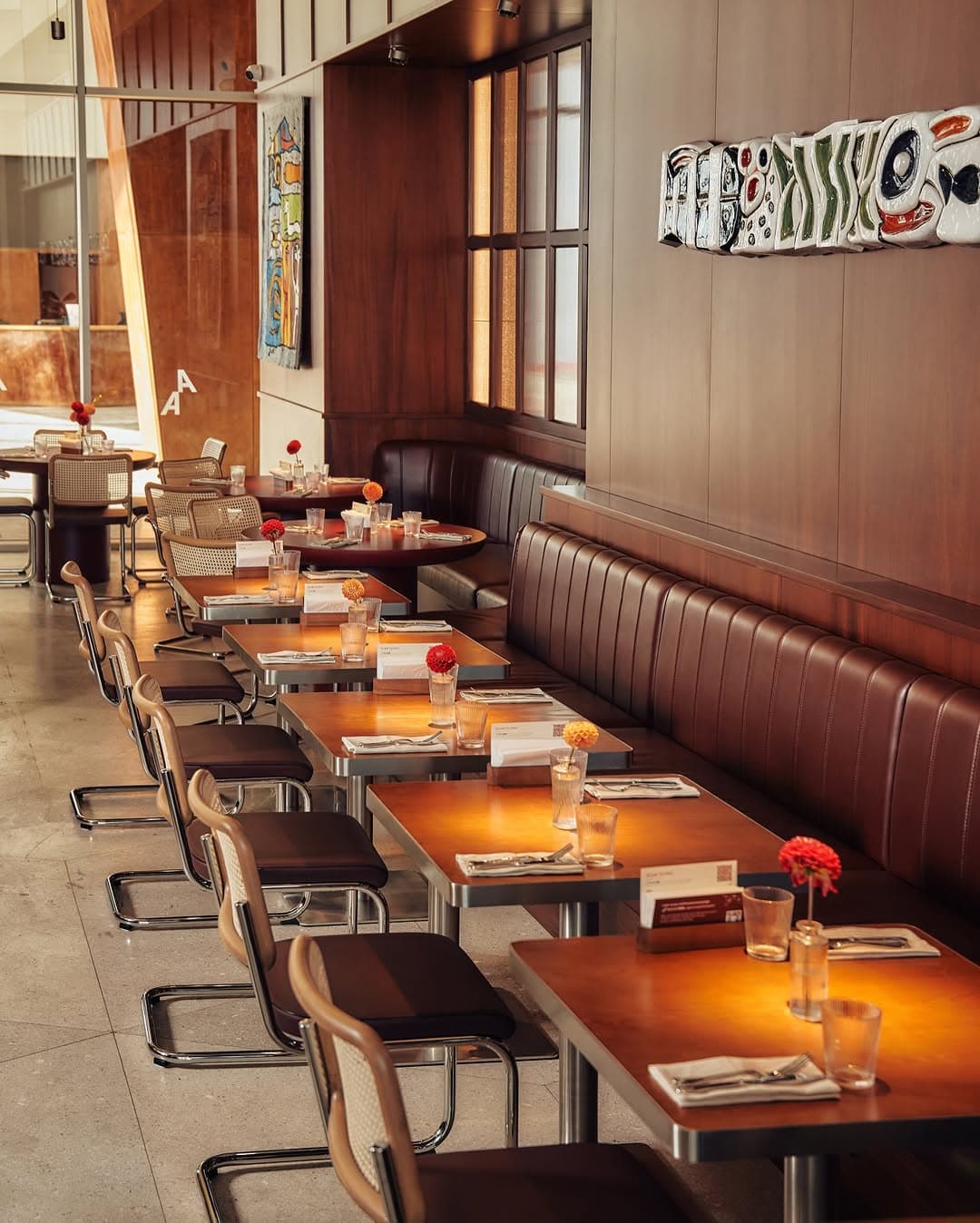
Start with breakfast at Cafe Alma, which is located directly inside the Almaty Museum of Arts at 28 Al-Farabi Avenue. Order the Almaty breakfast and a glass of crémant — a light sparkling wine is appropriate here.
11:00
Then proceed to the Almaty Museum of Arts — the entrance is directly from the café. It is better to buy the ticket in advance on the website www.almaty.art.
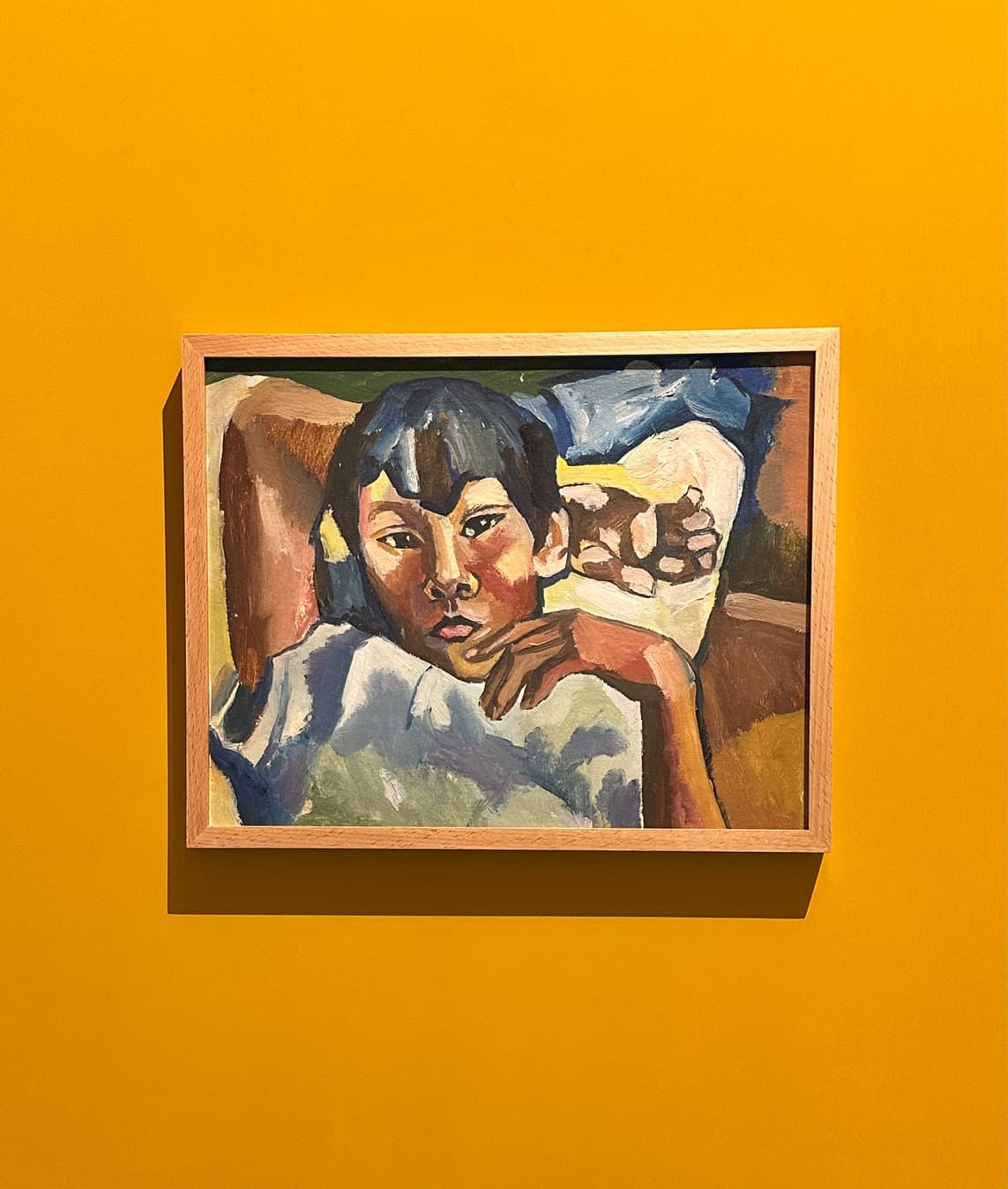
On the first floor — a hall with the permanent collection: iconic works by Kazakh artists of the 20th century and “Intersection” by Richard Serra. On the second — works by Yayoi Kusama, Bill Viola and Anselm Kiefer.
Until the 19th century, fine art in Kazakhstan developed in the form of decorative and applied arts, decorating yurts, clothing, and household items. Since the late 19th century, influenced by Russian artists and alongside the development of a national school, professional painters began to emerge.. In the 20th century, Abylkhan Kasteev, Zhanatay Shardenov and other masters laid the foundations of Kazakh painting.
12:30
Exit and head down Nazarbayev Avenue toward the Central State Museum of Kazakhstan.
In Almaty, “down” means moving away from the mountains, that is, in the northern direction. This route is entirely built “down”, so the walk will be easy and without shortness of breath. This will take about 15 minutes.
You will walk along one of the main avenues of Almaty and feel the city.
Frankly speaking, there is little of interest in the museum, but it is worth visiting the hall of Kazakh ethnography to see the authentic interior of a yurt.
The Kazakh yurt is a portable frame dwelling with felt covering, which appeared in the 12th century BC and is recognized by UNESCO as a masterpiece of nomadic civilization.
13:30
Exit and go down again — 7 minutes — to 220/3 Nazarbayev Avenue to have lunch at Renee Cafe.
14:30
Walk toward the Independence Monument along Satpayev Street — it will take about 5 minutes.
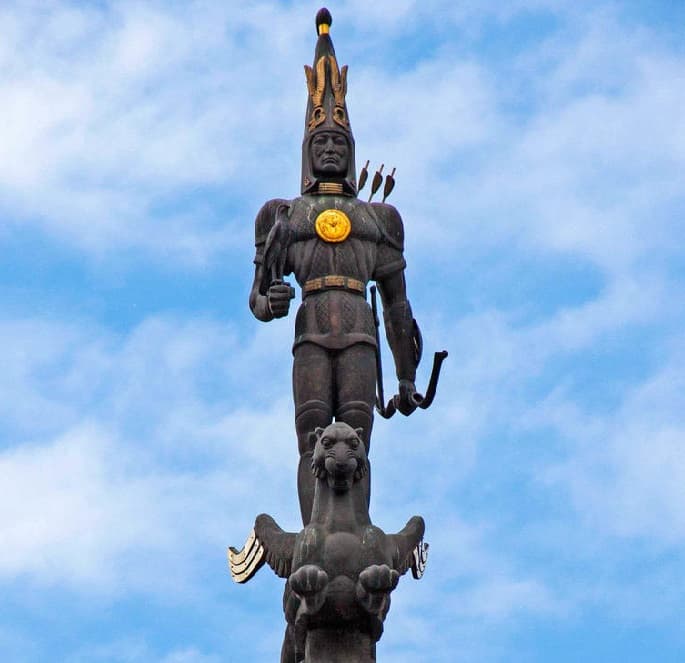
Here you will see the symbol of the country — the “Golden Man” on a winged snow leopard and bas-reliefs with 10 scenes reflecting key moments in the history of Kazakhstan.
The Golden Man is a legendary archaeological find symbolizing the greatness of the Saka culture and the richness of the nomadic traditions of the Great Steppe. Discovered in 1969 in the Issyk burial mound 50 km from Almaty, this warrior in golden armor became an icon of Kazakh history. In the mound, dating back to the 5th–4th centuries BC, a burial complex of a Saka warrior was found. His body was dressed in armor decorated with gold plates with images of animals — symbols of Saka mythology.
15:00
Walk down Baiseyitova Street to Petit Chocolate & Coffee (45 Baiseyitova Street). Here you can have a coffee and try handcrafted chocolate with kurt or zhent.
Kurt is a traditional Kazakh and Turkic fermented dairy product — a type of dried cheese. Zhent is a dessert of Kazakh origin made from roasted and ground millet, with the addition of ghee and honey.15:45
Continue your walk along Baiseyitova to Shevchenko Street. Baiseyitova Street is one of the most well-known pedestrian streets in the center of Almaty.
Head toward Nazarbayev Avenue to reach 83 Kabanbay Batyr Street — this will take about 15 minutes.
Here you will see the wine place Agora Wine & Dine. Order a glass of wine and antipasti.
16:45
Exit and move toward Hotel Almaty. On the way — the building of the Abai Kazakh National Opera and Ballet Theatre and Panfilov pedestrian street — a place of attraction for walks, meetings, and cultural leisure.
17:00
Approach Hotel Almaty.
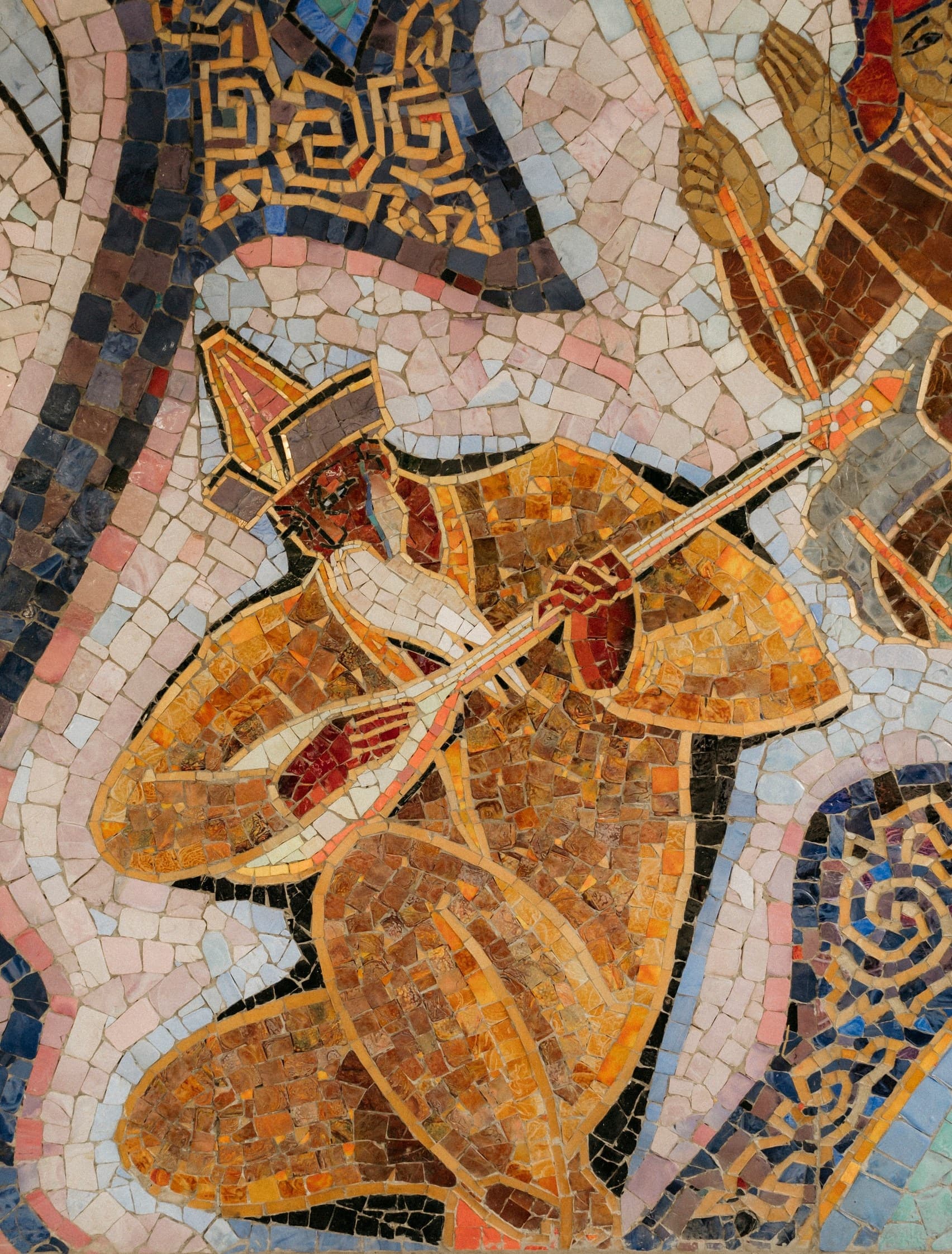
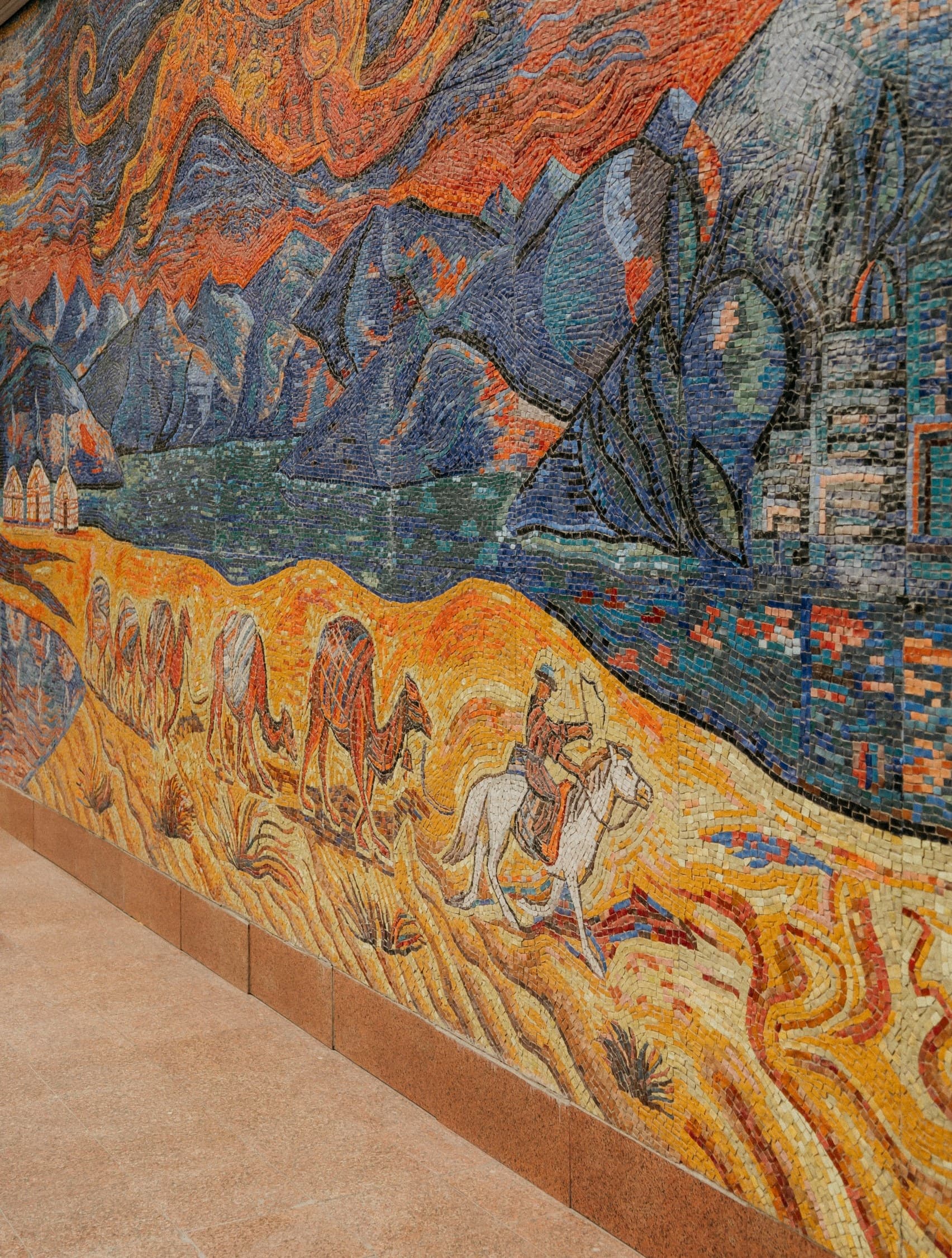
On the facade of the hotel, you will see two mosaic panels: first the composition “Enlik-Kebek” (1965), created by M. Kenbayev and N. Tsivchinsky, then — “The Silk Road” (2004) by the artist V. Tverdokhlebov.
In Almaty, mosaics are not just decorative elements but an important part of the city’s cultural code. This became especially evident during the Soviet decades, when the facades of schools, residential buildings, bus stops, and sanatoriums were adorned with monumental panels.
Mosaics are made from smalti — opaque colored glass produced by melting it with the addition of metal oxides. It is a classic, durable material known since antiquity.
Enlik-Kebek is a real story of tragic love between the girl Enlik and the young man Kebek, which took place in the 18th century in the Shyngystau region of the modern Abai region (Eastern Kazakhstan).
Enlik was betrothed in childhood to a tribesman, but he died, and according to custom, she was supposed to marry his brother, Yesen. However, Enlik met and fell in love with Kebek.
Enlik refuses to marry Yesen and leaves with Kebek. Their escape and relationship were considered a grave crime, disgracing the clans. The elders of the clans decided: for violating tribal customs, Enlik and Kebek should be put to death. They hid from persecution in the mountains. They were found and executed: they were tied to the tails of horses and dragged across the ground at full speed until life left them.
As for the panel “The Silk Road” — Almaty inherits its name from one of the points of the Great Silk Road and is located on an ancient inhabited territory. The Great Silk Road, which originated in the 2nd century BC, functioned until the 14th century. The route passed through Southern Kazakhstan and Semirechye, turning the region into a key trade and cultural hub between East and West in the Middle Ages.
17:20
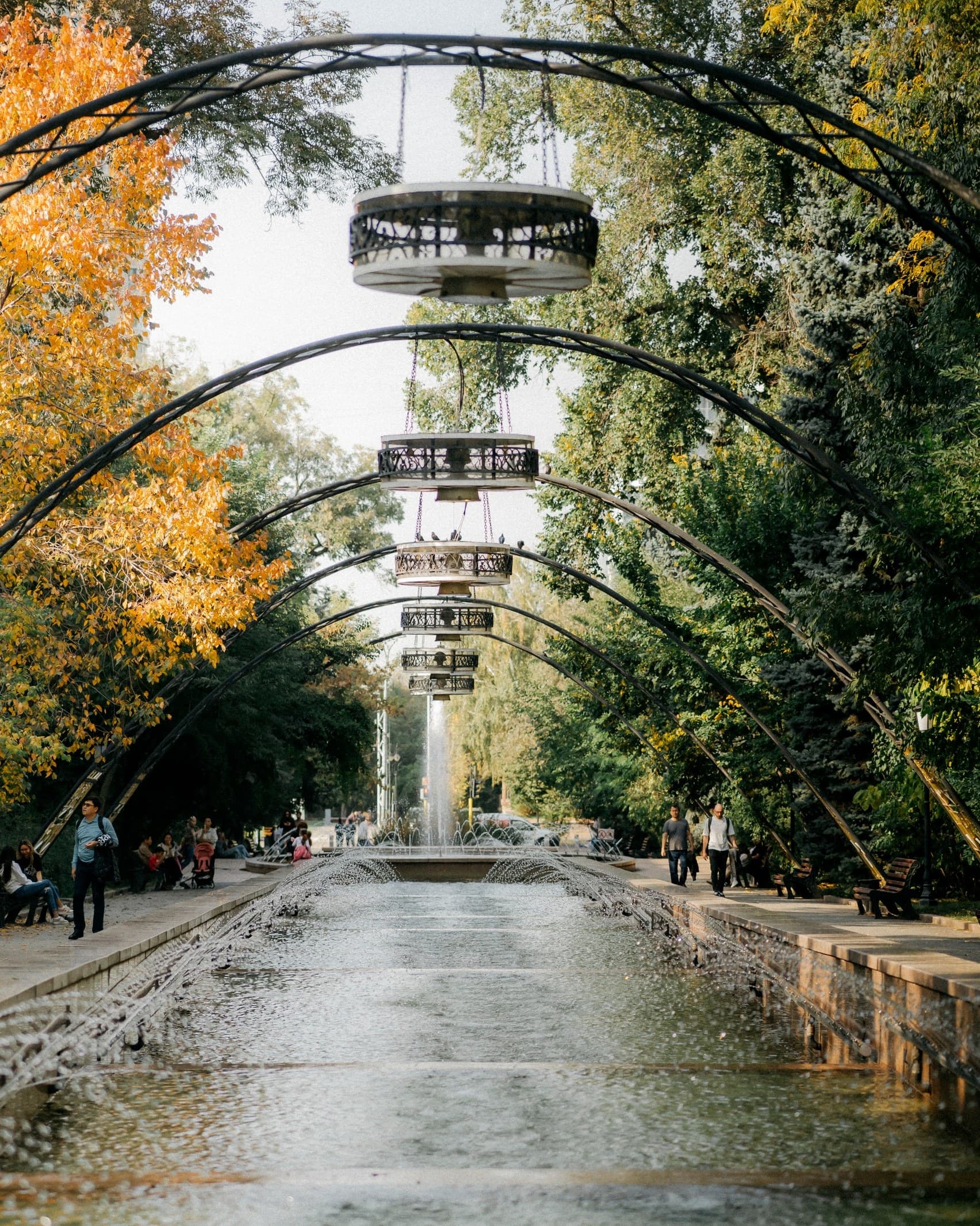
Cross the road to see the “Nedelka” fountain — one of the most recognizable and popular fountains in the city, built in 1972. This name was given because seven wrought iron arches with the names of the days of the week hang above it. In the middle of each arch hang round lanterns with ornate patterns. The fountain is arranged in a cascade, and the water imitates a turbulent mountain river. The meaning of “Nedelka” is that time is fleeting, so each day should be spent usefully. Nearby, stop by Umami to try ice cream made from original recipes.
Right next to it is Korkem Experience Store — a conceptual store where vintage items coexist with contemporary creations.
I would also have a glass of wine here at the cozy Korkem Gourmet.
18:00
That’s it, now you can have dinner.
Nearby there is a huge choice of places for every taste. Choose something at your discretion: Aurora Cafe, Shchuka Bistro, Grand Zina, Afisha, Wine Cafe.
This route is one of many options with an emphasis on wine and gastronomic spots and art. Copying and use of the material is allowed only with attribution to Wine Nomad.

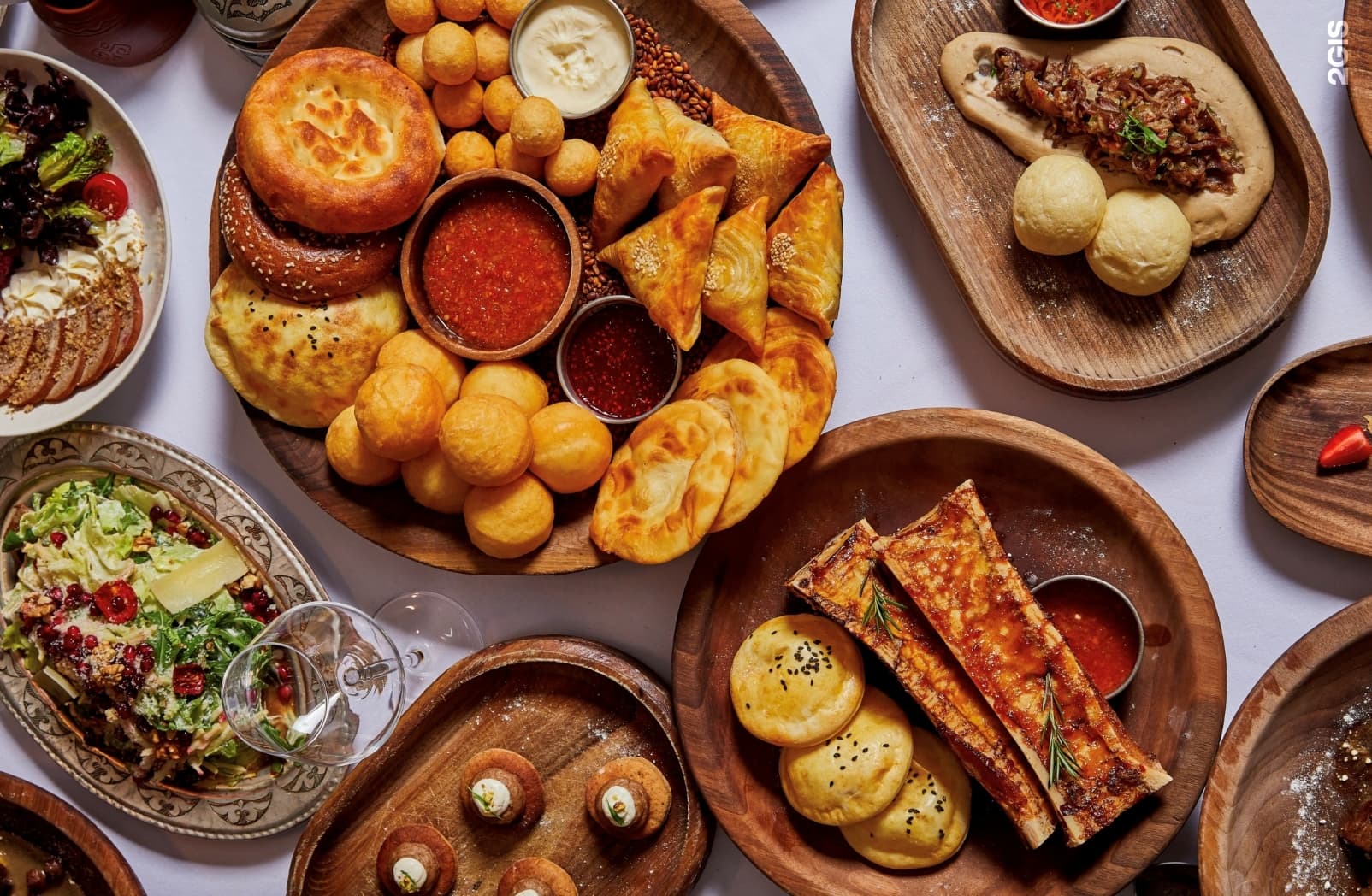
Источник фото: Sandyq restaurant
Kazakh cuisine was shaped by a nomadic way of life, where food needed to be nourishing, easy to transport, and...
Read more
 Subscribe